11 Small Sewing Room Ideas For A Tight Space
A sewing room doesn’t need square footage to work hard. It needs a plan. These small sewing room ideas come from real rooms, closets, and corners where every inch earns its keep.
You’ll see fold-out cabinets, pegboards, and repurposed dressers doing the job of a full studio. Some rooms sit in a spare bedroom. Others tuck into a closet or a sliver of attic space.
If your sewing setup lives on a kitchen table right now, there’s a layout here worth stealing.
Pink Sewing Corner With A Letter Pegboard
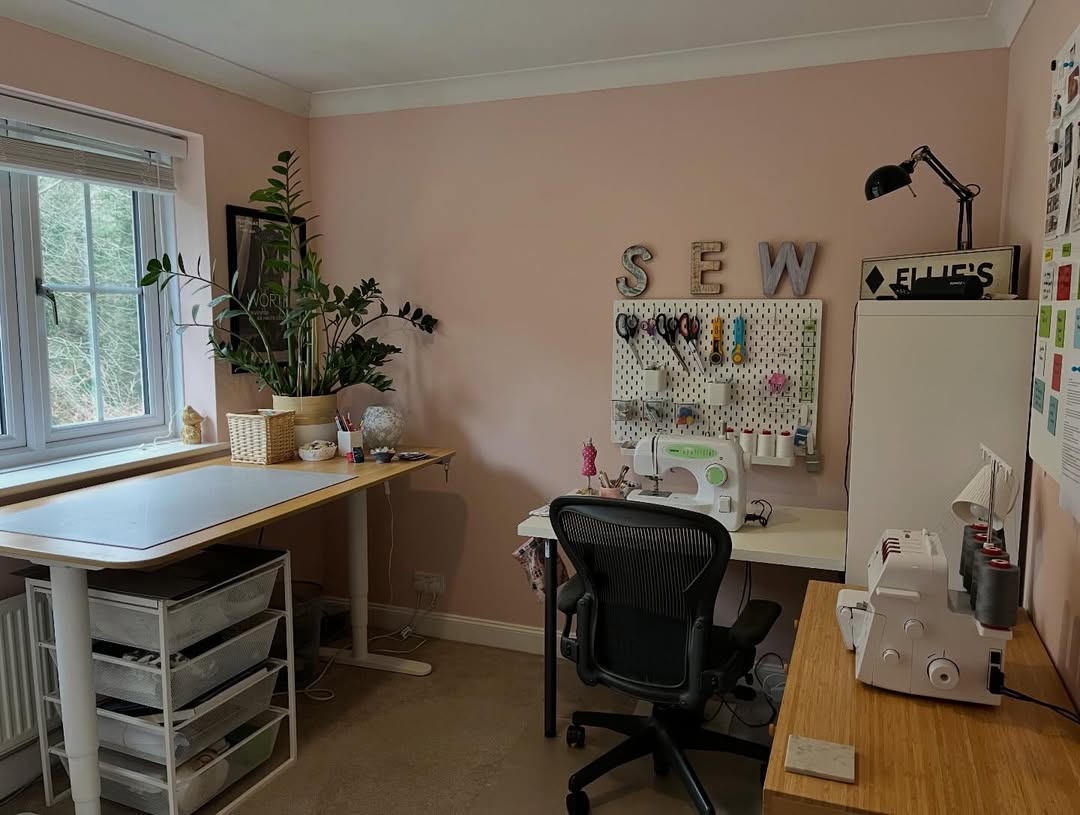
Photo by @ellie2373
Big block letters spelling “SEW” sit right above the pegboard, and that’s the kind of small personal touch that makes a corner feel like a real workspace instead of a leftover spot.
Scissors and thread hang within reach, and a rolling drawer cart tucks under the cutting table for extra storage. Blush pink walls keep the whole room calm and bright.
- A pegboard above the machine keeps tools visible instead of buried in a drawer
- A rolling cart adds storage without needing a full cabinet
- Leafy plants soften a room full of hard surfaces and metal tools
Corner Thread Wall In A Tiled Craft Nook

Photo by @umutmobilyatasarim
This whole setup folds into a corner, with two tall cabinet doors packed with yarn, thread, and fabric on one side and a fold-out desk on the other. It’s proof a small sewing room can still hold a serious stash.
Everything closes up flat against the wall when you’re done, so the room goes back to looking tidy in seconds.
If storage space is your biggest problem, this vertical, door-mounted layout is worth studying. Stacking supplies floor to ceiling on the inside of cabinet doors uses space a normal shelf would waste.
Mustard Dresser Doubling As A Cutting Table

Photo by @emptynestsewingshop
An old dresser gets a second life here as a cutting station, its top cleared for pinning and folding fabric. Drawers below keep supplies out of sight, so the room doesn’t look like a workshop.
A patchwork lampshade and a garland of vintage sewing patterns add color without taking up any floor space at all.
This is a good option if you’re furnishing a sewing room on a budget. A secondhand dresser plus a coat of paint gets you a cutting table and storage in one single piece.
Modular Cabinet Wall With Built-In Thread Racks

Photo by @createroomco
This is the go-big version of a small sewing setup. A full wall of interlocking cabinets holds fabric, thread, and notions, with pegboard panels on the outside for even more thread storage.
Everything rolls, so the whole system can shift or fold away when it’s not in use. That’s a smart trick if this room does double duty as something else.
A few things worth copying, even at a smaller scale:
- Door-mounted pegboards turn dead space into thread storage
- Modular units let you add pieces over time instead of buying it all at once
- Rolling casters mean the setup isn’t locked into one layout
Pink Singer Machine On A Ruffled Desk
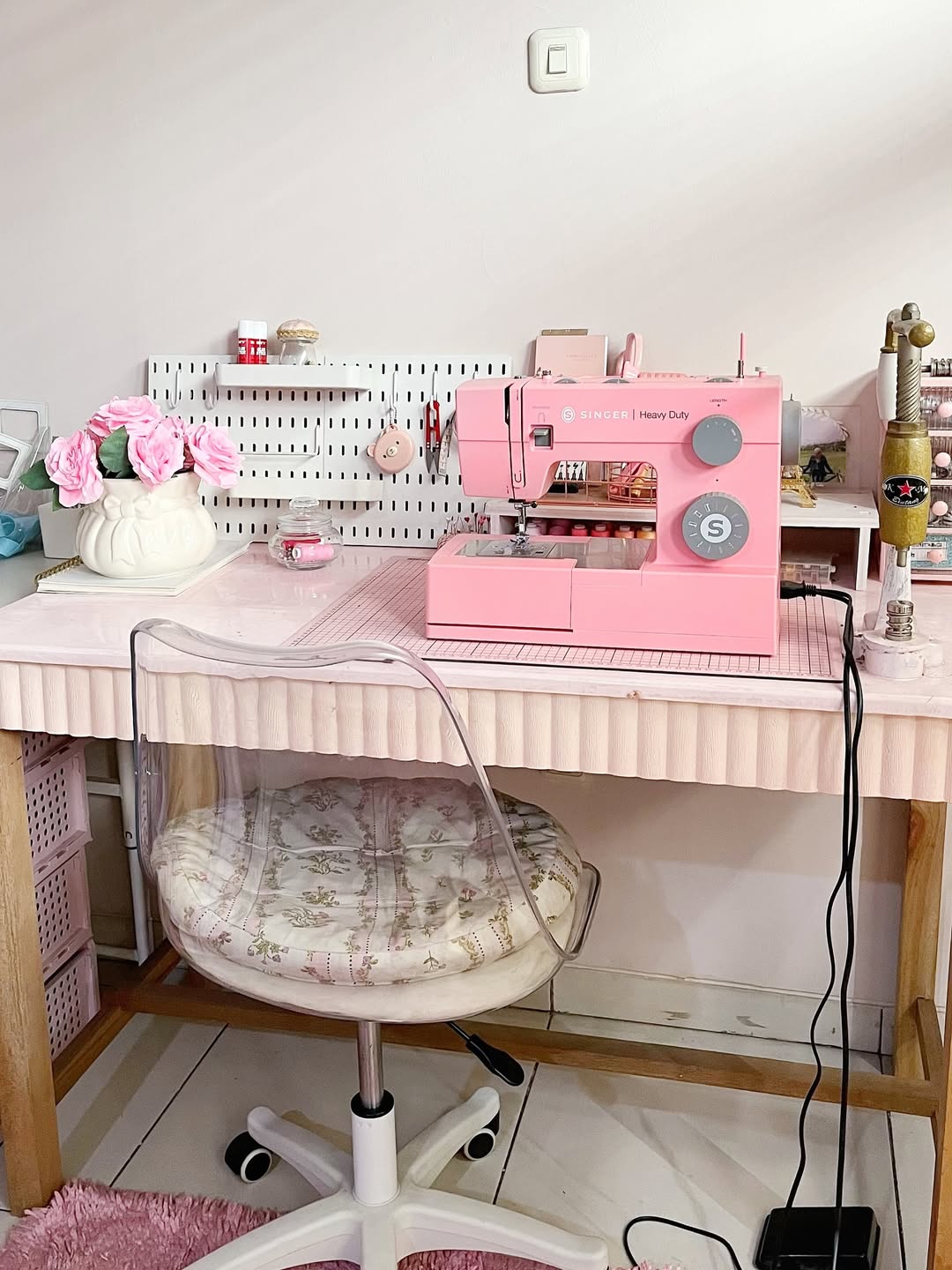
Photo by @singerindonesia
Color does a lot of the work here. A bubblegum pink sewing machine sits front and center on a ruffled pink desk skirt, with a small pegboard nearby for scissors and pins.
A clear acrylic chair keeps the look light instead of bulky, which matters in a small sewing room where every piece of furniture takes up precious floor space.
Honestly, that one bold pink machine is doing most of the visual work in this whole setup. Pick one statement piece, then keep everything else simple around it.
Fold-Out Sewing Desk Hidden In A Cabinet

Photo by @canbaba_mobilya
This whole workstation disappears into a cabinet when it’s not needed, which is genuinely clever if your sewing room also has to be a bedroom. A mounted TV and wall clock keep the space feeling like a normal room, not a workshop.
Two side panels fold open to reveal a compact desk with room for a machine and a serger side by side.
This setup is worth copying if you don’t have a spare room to dedicate. Fold-away sewing stations let a single piece of furniture serve two totally different purposes.
Taupe Cabinet System With A Drop-Down Table
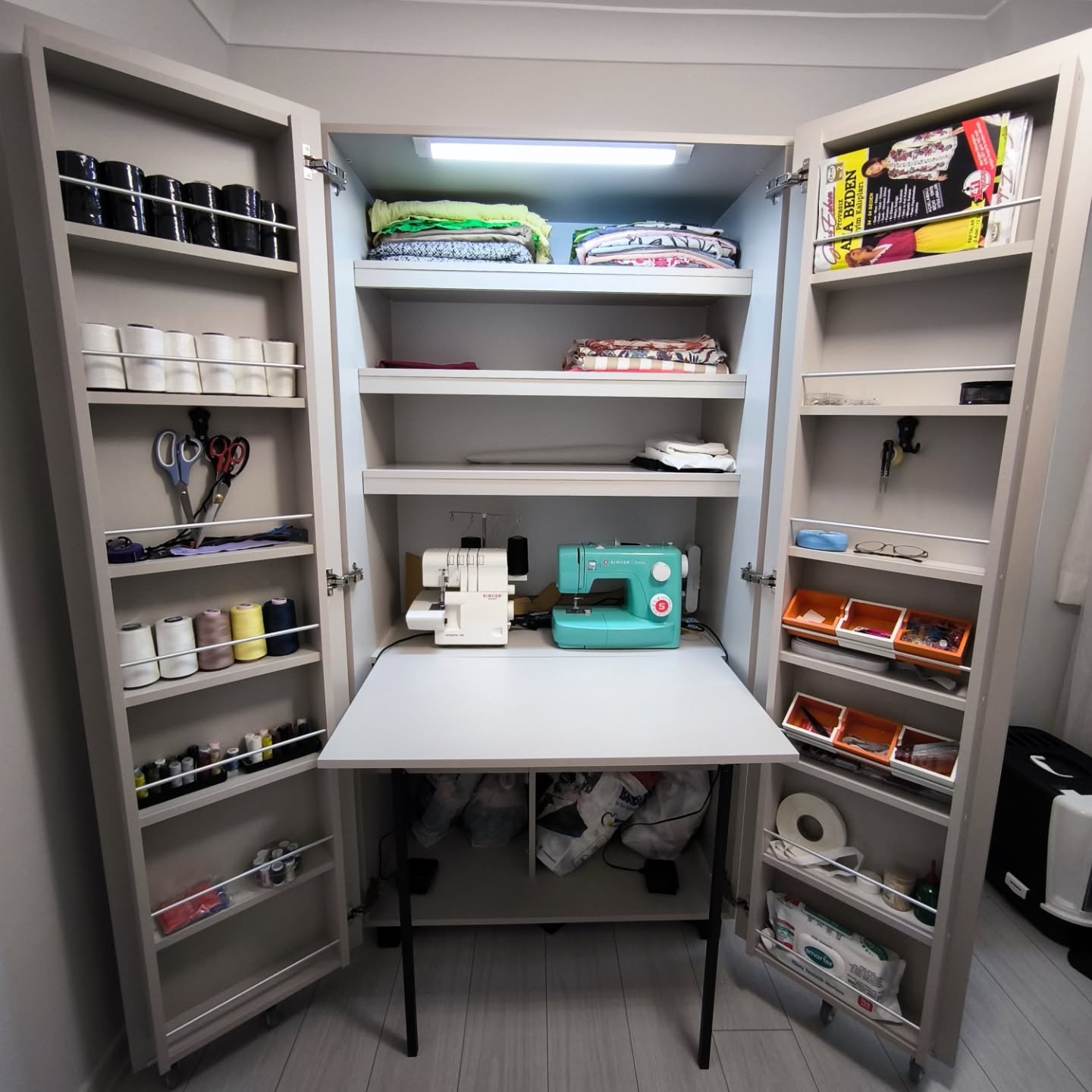
Photo by @umutmobilyatasarim
Open the doors on this cabinet and a full sewing station drops down, complete with a serger, a machine, and shelving stacked with folded fabric and magazines. Thread spools line both interior doors on metal racks.
A built-in light above the shelves means you’re not working in your own shadow, which matters once the doors close in around you.
If you’re tight on space, this is close to the ideal setup: everything you need lives behind two doors, and the room looks completely normal once they’re shut.
Marble-Walled Studio With A Thread Display
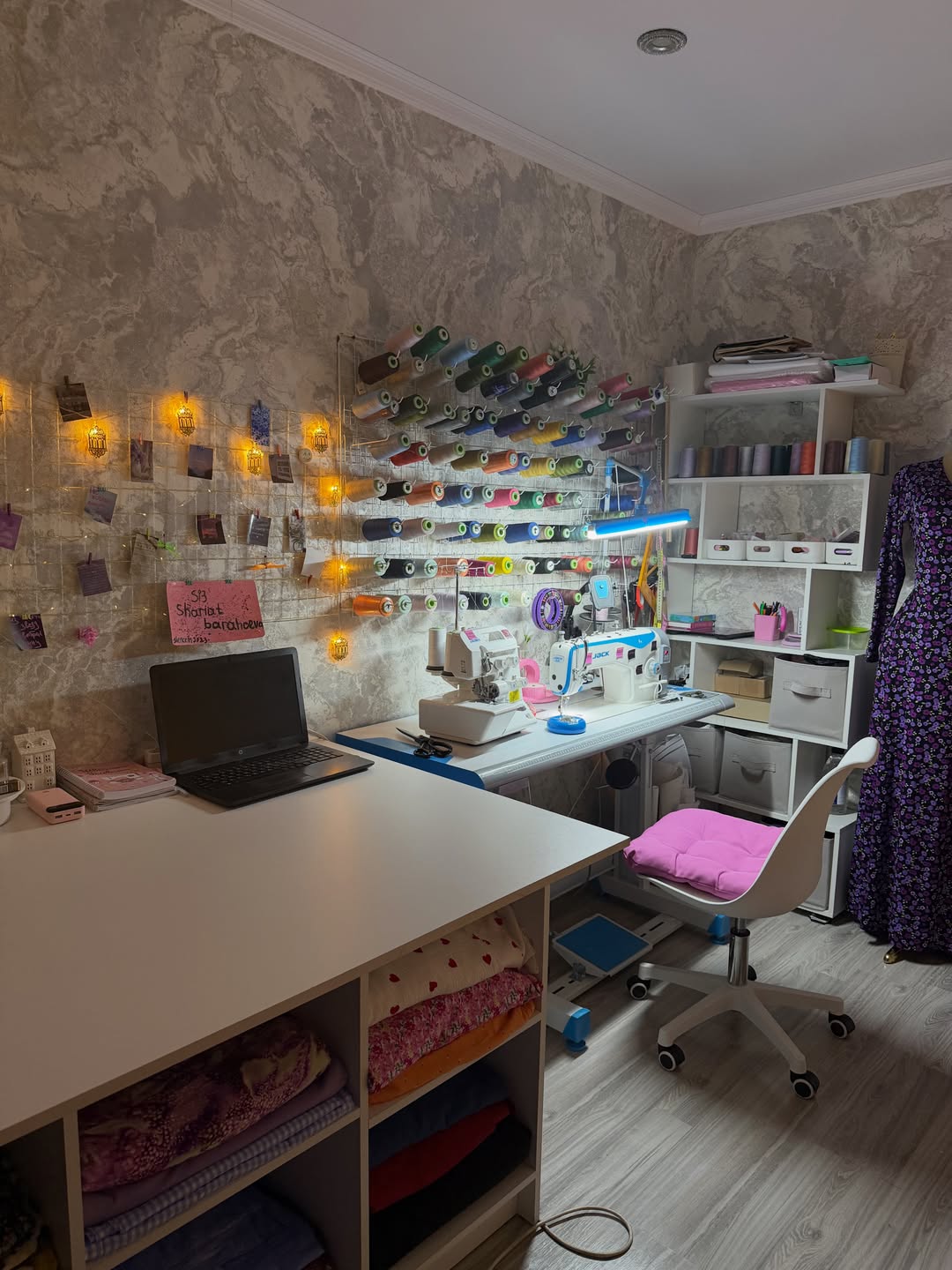
Photo by @shariat_barahoeva
Rows of thread spools climb the wall here like a piece of art, mounted on wire grids against marbled wallpaper. Fairy lights and photo clips add a personal touch above the desk.
A pink cushion softens a plain white chair, and a mannequin dressed in a bold purple gown stands off to the side, doubling as both storage and inspiration.
- Wire grid panels turn thread spools into wall decor
- String lights add warmth to a workspace with no windows
- A dress form works as both a mannequin and a design reference
Quilting Corner With A Cheerful Pegboard Wall

Photo by @mushroommamacrafts
Framed mini quilts line the wall above a pink pegboard packed with scissors, pincushions, and tiny keepsakes. A “what would Martha do” sign adds a little humor to all that careful organizing.
Rolling storage carts sit under the desk on one side, while open cubbies hold folded fabric on the other, keeping the whole setup easy to reach without much bending.
This room leans into personality instead of hiding it. If your sewing space feels a little too plain, small collectibles and framed projects are an easy way to make it feel like yours.
Tiny Cave Sewing Desk With Labeled Zones
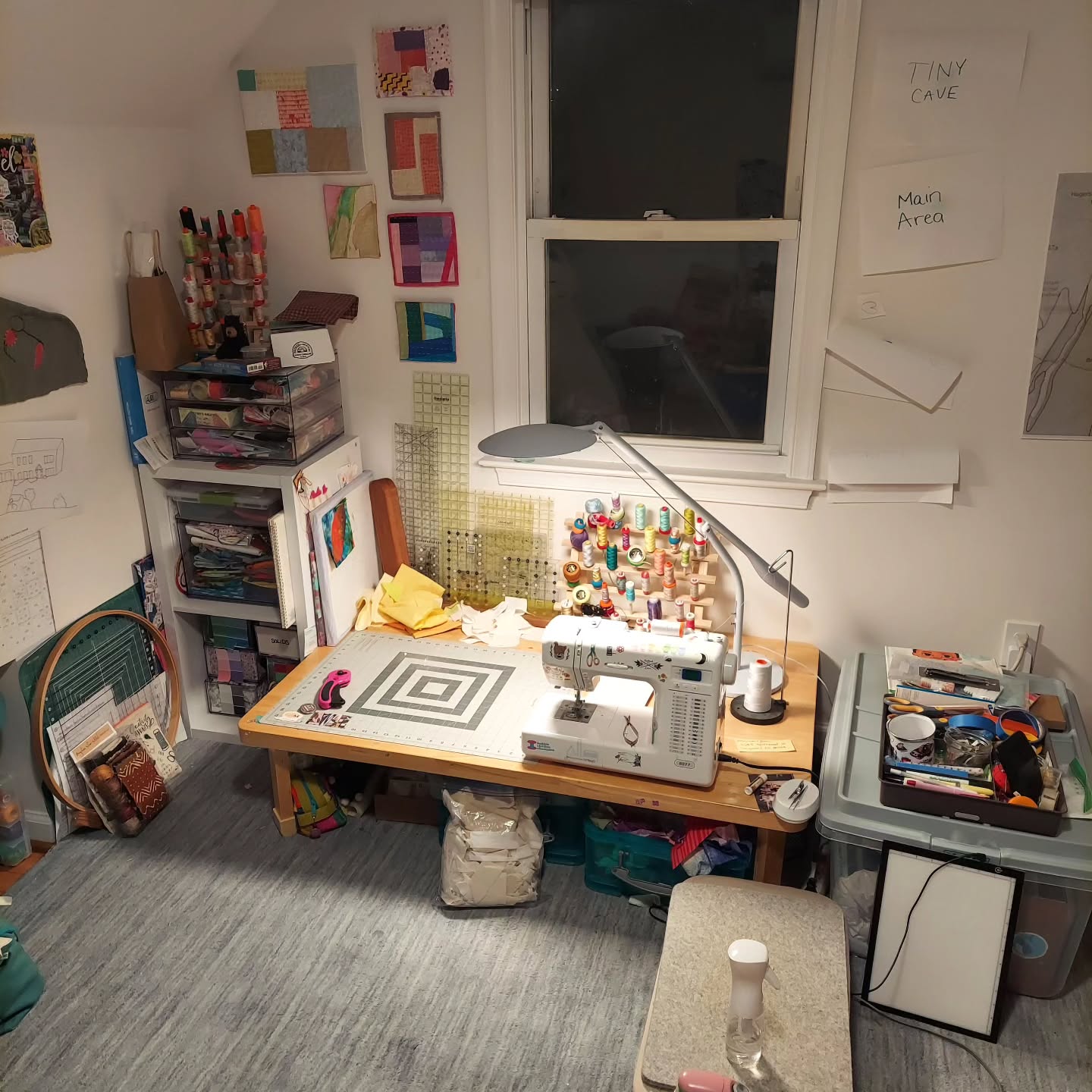
Photo by @quilting_julia
Handwritten labels reading “Tiny Cave” and “Main Area” mark out zones in this attic-style room, which is a smart trick for keeping a small, oddly-shaped space from feeling chaotic.
A wooden cutting table anchors the room, with a thread rack and swing-arm lamp positioned right where the light is needed most. Small quilted art pieces decorate the sloped wall above.
If your sewing room sits in an attic or converted nook, labeling zones like this genuinely helps. It turns an irregular floor plan into something that still makes sense at a glance.
Playful Pink Corner With A Tool Chest Cart

Photo by @bethmakes__
A bold “Hot Girls Sew” banner sets the tone for this corner, paired with a pink pegboard holding embroidery hoops, rulers, and thread. A pink tool chest cart stands in as sewing storage instead of a typical craft cart.
A cutting mat leans against the wall nearby, ready to grab without needing a dedicated table.
That tool chest is a fun, unexpected swap worth trying. Repurposed furniture like this often costs less than craft-specific storage and holds just as much.
Final Thoughts On Small Sewing Spaces
Across all eleven rooms, the same pattern keeps showing up: vertical storage, doors that hide the mess, and one or two personal touches that make the space feel like more than a workshop. That’s really the heart of good small sewing room ideas.
Before copying any of these, think about how the room needs to double up. A fold-away cabinet suits a shared bedroom, while open pegboards work best in a room that’s sewing-only.
Start with what you actually use daily, then build storage around that. A tidy sewing corner beats a cluttered whole room every time.